
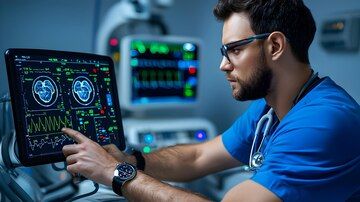
Modern medical devices have fundamentally reshaped the practice of healthcare. Where clinicians once relied on observation, intuition, and delayed laboratory results, they now work alongside sophisticated instruments that deliver continuous, actionable insight at the point of care. For healthcare organizations, technology leaders, and device manufacturers alike, understanding this transformation is essential. The question is no longer whether modern devices improve patient care, but how decisively they do so — and what that means for the future of clinical practice.
This article examines the key ways in which contemporary medical technology elevates the standard of care, from earlier diagnosis to safer procedures and more connected patient journeys.
Earlier and More Accurate Diagnosis
One of the most significant contributions of modern medical devices is the ability to detect disease earlier and with greater precision. Advanced imaging systems, wearable biosensors, and AI-assisted diagnostic tools allow clinicians to identify conditions at stages where intervention is most effective.
- High-resolution imaging enables the detection of tumors, vascular abnormalities, and structural defects that would have been invisible to earlier generations of equipment.
- Continuous monitoring wearables capture physiological data around the clock, surfacing patterns that a single office visit could never reveal.
- AI-assisted interpretation supports radiologists and pathologists by flagging anomalies and prioritizing cases for review.
The result is a diagnostic process that is faster, more consistent, and less prone to human error — a direct benefit to patient outcomes.
Remote Monitoring and Continuous Care
Remote patient monitoring has moved care beyond the walls of the hospital. Connected devices — from smart glucose monitors to implantable cardiac devices — transmit real-time data to care teams, enabling proactive intervention rather than reactive treatment.
This shift is particularly valuable for patients managing chronic conditions. Instead of waiting for symptoms to escalate, clinicians can adjust treatment plans based on live data. Patients, in turn, gain greater visibility into their own health and a stronger sense of engagement in their care journey.
Key benefits of remote monitoring
Enhanced Surgical Precision and Safety
Surgical innovation is another area where modern devices have delivered measurable gains. Robotic-assisted surgery platforms, advanced endoscopic tools, and intraoperative navigation systems give surgeons unprecedented control and visibility. Smaller incisions, reduced blood loss, and shorter recovery times are now achievable in procedures that once required extensive intervention.
Beyond the operating room, integrated safety systems — including automated medication dispensers and smart infusion pumps — reduce the risk of dosing errors and adverse events. These devices act as a critical layer of protection, complementing clinical judgment with hard safeguards.
Data Integration and Clinical Decision Support
Modern devices do more than collect data; they connect it. Integration with electronic health records allows a continuous flow of information across departments and care settings. When a bedside monitor, a laboratory analyzer, and a radiology suite all feed into a unified record, clinicians gain a complete, real-time picture of the patient.
Clinical decision support systems built on this data can surface alerts, recommend evidence-based protocols, and identify patients at risk before complications arise. The outcome is care that is more coordinated, more informed, and more personalized.
Comparing Traditional and Modern Device Capabilities
The contrast between legacy equipment and today’s connected devices illustrates the scale of improvement across the care continuum.
| Data collection | Periodic, manual | Continuous, automated |
| Diagnostic support | Clinician interpretation only | AI-assisted analysis |
| Patient location | In-hospital only | Home and remote settings |
| Integration | Standalone systems | Connected to EHR and cloud platforms |
| Intervention timing | Reactive | Proactive and predictive |
The Road Ahead
Modern medical devices are not simply incrementally better tools — they represent a structural shift in how care is delivered. By enabling earlier diagnosis, continuous monitoring, safer procedures, and data-driven decision-making, they empower clinicians and improve outcomes for patients across the entire care journey.
For organizations investing in medical technology, the priority should be clear: choose devices that integrate, scale, and produce actionable insight. The devices that succeed in the coming decade will be those that not only measure the patient’s condition but actively support the clinical team in improving it. That is the promise of modern medical technology — and the standard against which it will be judged.