
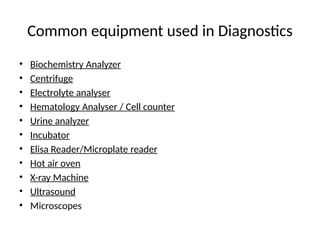
Diagnostic medical equipment forms the backbone of modern healthcare. These devices enable clinicians to detect, monitor, and manage disease with a level of precision that was unimaginable just a few decades ago. For healthcare organizations, technology vendors, and medical professionals alike, understanding the landscape of diagnostic equipment is essential—not only for procurement and compliance, but for delivering better patient outcomes. This article explores the most common categories of diagnostic medical equipment, their core functions, and the technological trends shaping their evolution.
What Constitutes Diagnostic Medical Equipment?
Diagnostic medical equipment refers to any device, instrument, or system used to identify a patient’s condition, disease, or injury. Unlike therapeutic equipment, which treats conditions, diagnostic tools are designed to gather data—through imaging, electrical signals, chemical analysis, or physical measurement. These devices must meet stringent regulatory standards, including FDA clearance in the United States and CE marking in Europe, to ensure safety and accuracy.
Broadly speaking, diagnostic equipment falls into several major categories: imaging systems, patient monitoring devices, laboratory and in-vitro diagnostics, and point-of-care testing tools. Each category serves a distinct clinical purpose and operates on different technological principles.
Imaging Equipment
Medical imaging remains one of the most consequential areas of diagnostics, allowing physicians to visualize internal structures without invasive procedures. The following are the most widely deployed imaging modalities:
- X-ray systems — The oldest and most accessible imaging technology, used for bone fractures, chest examinations, and dental diagnostics. Digital radiography has largely replaced film-based systems, improving workflow and reducing radiation exposure.
- Computed Tomography (CT) scanners — Combine multiple X-ray images to produce cross-sectional views of the body. CT is critical in emergency medicine, oncology, and surgical planning.
- Magnetic Resonance Imaging (MRI) — Use powerful magnetic fields and radio waves to generate detailed images of soft tissue. MRI is indispensable in neurology, orthopedics, and cardiology.
- Ultrasound systems — Emit high-frequency sound waves to produce real-time images. Ultrasound is widely used in obstetrics, cardiology, and emergency medicine due to its portability and lack of ionizing radiation.
- Nuclear medicine and PET scanners — Detect radioactive tracers to assess organ function and metabolic activity, playing a central role in cancer staging and cardiac evaluation.
Patient Monitoring Devices
Continuous monitoring is essential in critical care, surgery, and inpatient settings. These devices track vital physiological parameters and alert clinicians to deterioration in real time.
- Electrocardiogram (ECG/EKG) machines — Record the heart’s electrical activity to detect arrhythmias, ischemia, and other cardiac conditions.
- Vital signs monitors — Consolidate heart rate, blood pressure, respiratory rate, temperature, and oxygen saturation into a single interface.
- Pulse oximeters — Measure oxygen saturation in the blood non-invasively, a standard tool in respiratory care and anesthesia.
- Blood pressure monitors — Range from manual sphygmomanometers to automated oscillometric devices used across clinical settings.
- Capnography devices — Monitor carbon dioxide levels in exhaled breath, critical during sedation and mechanical ventilation.
Laboratory and In-Vitro Diagnostic Equipment
Laboratory diagnostics analyze blood, urine, tissue, and other specimens to detect disease markers, infections, and metabolic imbalances. Core equipment includes:
Point-of-Care Testing (POCT) Devices
Point-of-care testing brings diagnostics to the patient’s side, reducing turnaround time and improving clinical decision-making. Common POCT devices include glucose meters, blood gas analyzers, rapid antigen tests, and portable coagulation monitors. These tools are increasingly deployed in emergency departments, ambulances, and resource-limited environments.
Comparison of Major Diagnostic Equipment Categories
| Imaging | Visualize internal anatomy and function | Radiology, emergency, surgery | High capital cost; radiation safety for CT/X-ray |
| Patient Monitoring | Track vital signs continuously | ICU, OR, general wards | Alarm management; integration with EHR |
| Laboratory Diagnostics | Analyze specimens for disease markers | Central and hospital labs | Throughput; regulatory compliance (CLIA) |
| Point-of-Care Testing | Deliver rapid results at the bedside | Emergency, clinics, field care | Accuracy validation; connectivity |
Emerging Trends in Diagnostic Technology
Several forces are reshaping diagnostic equipment. Artificial intelligence is being embedded in imaging systems to assist with lesion detection and triage. Connectivity and interoperability standards, such as HL7 and FHIR, allow devices to feed data directly into electronic health records. Meanwhile, miniaturization and wearable sensors are pushing diagnostics beyond the hospital walls, enabling remote monitoring and decentralized care.
Cybersecurity has also emerged as a critical concern. Networked diagnostic devices represent potential attack surfaces, and regulators increasingly require manufacturers to build security into the device lifecycle. Procurement teams should evaluate vendors not only on clinical performance but on security posture and long-term support.
Conclusion
Diagnostic medical equipment spans a diverse and rapidly evolving spectrum—from time-tested X-ray systems to AI-assisted imaging platforms and molecular diagnostics. Understanding these categories helps healthcare organizations make informed purchasing decisions, maintain regulatory compliance, and ultimately improve patient care. As technology advances, the line between diagnostics and therapeutics will continue to blur, making strategic investment in diagnostic infrastructure more important than ever.