
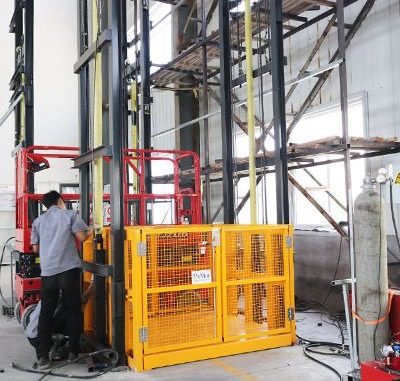
Warehouse operations depend on the safe, efficient movement of heavy and awkward loads. Lifting equipment sits at the heart of that workflow, determining throughput, protecting workers, and safeguarding inventory. Choosing the right mix of equipment requires a clear understanding of each category’s capabilities, limitations, and best-fit applications. This guide breaks down the primary types of warehouse lifting equipment and the uses for which each is engineered.
Why Lifting Equipment Matters in the Warehouse
Manual handling remains a leading cause of workplace injury in logistics environments. Beyond safety, lifting equipment directly influences productivity: the right tool reduces cycle times, minimizes product damage, and maximizes vertical storage capacity. A strategic approach to lifting equipment also supports compliance with occupational safety regulations and helps control long-term operational costs.
Manual Lifting Equipment
Manual solutions are cost-effective, flexible, and ideal for lighter loads or lower-volume operations. They require minimal training and little maintenance, making them accessible entry points for smaller facilities.
Hand Trucks and Dollies
Hand trucks and dollies are the workhorses of short-distance movement. A two-wheeled hand truck suits stacked boxes and cylindrical items, while platform dollies handle heavier, bulkier loads on flat surfaces.
- Uses: Moving pallets short distances, loading and unloading trucks, staging goods for put-away.
- Best for: Light to medium loads in aisles and dock areas where powered equipment is impractical.
Pallet Jacks
Manual pallet jacks lift and transport palletized loads using hydraulic force. They are indispensable for quick horizontal moves and are often paired with powered equipment for last-leg transport.
- Uses: Pallet handling in receiving, staging, and order-picking zones.
- Best for: Loads up to roughly 2,500 kilograms in confined spaces.
Lift Tables and Scissor Lifts
Lift tables raise work surfaces to ergonomic heights, reducing bending and reaching. Scissor lift tables provide vertical positioning for assembly, packing, and inspection tasks.
- Uses: Ergonomic workstations, feeding production lines, loading dock leveling.
- Best for: Repetitive lifting tasks where worker posture and fatigue are concerns.
Powered Lifting Equipment
Powered equipment delivers the throughput and lifting capacity required by high-volume distribution centers. These machines are subject to operator certification and regular inspection regimes.
Forklifts
Forklifts remain the most versatile powered lifting solution in warehousing. Counterbalance models handle palletized goods in open floor areas, while reach trucks excel in narrow aisles with high racking.
- Uses: Pallet handling, trailer loading, high-bay put-away and retrieval.
- Best for: High-throughput operations with diverse load profiles.
Order Pickers
Order pickers elevate operators to pick faces at height, improving accuracy and speed in piece-picking environments. They are essential where racking exceeds the reach of standard forklifts.
- Uses: Case and piece picking from multi-level racking.
- Best for: E-commerce and distribution operations with high SKU counts.
Electric Pallet Trucks
Electric pallet trucks combine the maneuverability of manual jacks with powered travel and lift, reducing operator fatigue during long shifts.
- Uses: Horizontal transport over longer distances, dock-to-staging moves.
- Best for: Medium-volume facilities seeking efficiency gains without full forklift investment.
Overhead and Vertical Lifting Systems
Overhead systems free up floor space and support heavy, repetitive, or precision lifting tasks that conventional trucks cannot address.
Overhead Cranes and Hoists
Bridge cranes and hoists move loads along fixed paths above the floor, ideal for heavy or oversized items. They are common in manufacturing-adjacent warehouses and heavy-goods storage.
- Uses: Lifting heavy machinery, steel, and bulky components.
- Best for: Fixed-layout facilities with predictable heavy-lift patterns.
Jib Cranes and Vacuum Lifters
Jib cranes provide localized lifting at workstations, while vacuum lifters handle smooth, non-porous items such as panels, glass, and cartons with precision and reduced manual strain.
- Uses: Workstation lifting, panel handling, repetitive carton movement.
- Best for: Ergonomic improvement in packing and assembly zones.
Comparing Lifting Equipment at a Glance
| Hand Truck / Dolly | Light to medium | Short-distance transport | Manual |
| Pallet Jack | Up to ~2,500 kg | Pallet handling | Manual or electric |
| Lift Table | Medium | Ergonomic positioning | Hydraulic or electric |
| Forklift | Medium to heavy | Pallet movement and racking | Electric, LPG, diesel |
| Order Picker | Light to medium | Height picking | Electric |
| Overhead Crane / Hoist | Heavy | Fixed-path heavy lifting | Electric or manual |
Selection Criteria for Warehouse Managers
Effective equipment selection balances several factors. Consider the following before committing to a purchase or lease:
Safety and Maintenance Best Practices
Regardless of type, lifting equipment must be inspected regularly and maintained according to manufacturer specifications. Establish pre-shift checks for powered units, document inspection records, and enforce load limits without exception. For overhead systems, schedule periodic structural and rigging inspections. Training should be ongoing rather than a one-time event, and near-miss reporting should be encouraged to catch hazards before they cause injury.
Conclusion
Warehouse lifting equipment spans a broad spectrum, from simple hand trucks to sophisticated overhead crane systems. The most effective operations combine categories thoughtfully: manual tools for flexibility and short moves, powered equipment for throughput, and overhead systems for heavy or precision lifting. By matching equipment to load profiles, facility constraints, and safety requirements, warehouse managers can build a lifting strategy that is efficient, compliant, and built to scale.