
In the rapidly evolving landscape of modern logistics and manufacturing, the movement of goods is no longer a simple matter of manual labor. As supply chains grow more complex and consumer demands for speed intensify, Automated Material Handling Systems (AMHS) have emerged as the critical infrastructure enabling operational resilience. These systems represent the convergence of mechanical engineering, robotics, and software intelligence, designed to move, store, protect, and control materials throughout the manufacturing and distribution process with minimal human intervention.
For technology leaders and operations managers, understanding the architecture and application of AMHS is essential for maintaining a competitive edge. This article breaks down the core components, operational benefits, and the technological drivers behind this industrial revolution.
What Are Automated Material Handling Systems?
At its core, an Automated Material Handling System is an integrated network of computer-controlled equipment and software used to transport materials within a facility. Unlike traditional manual handling, which relies on forklifts and human navigation, AMHS leverages a combination of hardware and software to execute repetitive tasks with high precision.
These systems are not merely about moving boxes from point A to point B. They are about optimizing the flow of inventory. By integrating with Warehouse Management Systems (WMS) and Enterprise Resource Planning (ERP) platforms, AMHS provides real-time visibility into inventory levels and location data, transforming the warehouse from a cost center into a strategic asset.
Core Components of an AMHS
To understand how these systems function, it is helpful to categorize them into three primary functional areas: storage, transportation, and sortation.
1. Automated Storage and Retrieval Systems (AS/RS)
AS/RS represents the pinnacle of high-density storage. These systems utilize robotic shuttles or cranes to place and retrieve items from racks automatically. They are particularly effective in high-volume environments where space is at a premium. By eliminating the need for wide aisles required by human pickers, AS/RS significantly increases storage density and reduces the facility footprint.
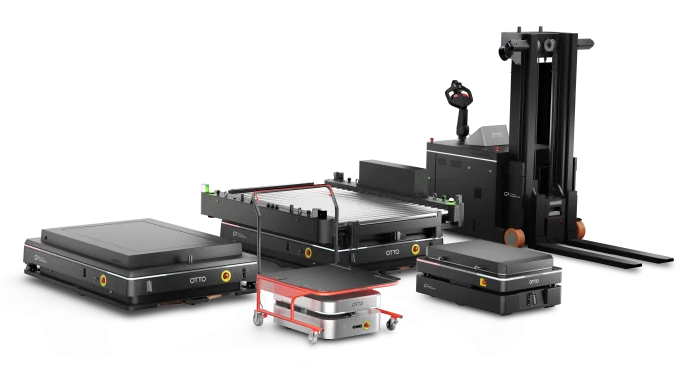
2. Automated Guided Vehicles (AGVs) and Autonomous Mobile Robots (AMRs)
While often used interchangeably, AGVs and AMRs serve distinct roles. AGVs follow predefined paths using wires or magnetic tape, ideal for predictable, high-volume transport. AMRs, conversely, use onboard sensors and cameras to navigate dynamically, allowing them to map their environment and avoid obstacles in real-time. This flexibility makes AMRs increasingly popular in dynamic e-commerce fulfillment centers.
3. Conveyor and Sortation Systems
Conveyors are the arteries of the warehouse, moving goods continuously between zones. Advanced sortation systems—such as cross-belt sorters or tilt-tray sorters—can divert individual parcels to specific destinations at high speeds. This capability is the engine behind same-day delivery promises, allowing distribution centers to process thousands of orders per hour with near-perfect accuracy.
Key Technologies Driving the Evolution
The efficiency of modern AMHS is driven by several cutting-edge technologies that work in unison:
- Artificial Intelligence and Machine Learning: AI algorithms analyze historical data to predict demand patterns, optimizing the placement and retrieval of goods to reduce travel time.
- IoT Sensors: Internet of Things sensors monitor the health of equipment in real-time, enabling predictive maintenance and reducing unplanned downtime.
- Computer Vision: Cameras and vision systems are used for barcode scanning, damage detection, and guiding robots with sub-millimeter precision.
- Digital Twins: Facilities use digital replicas of their physical systems to simulate workflows and test changes before implementation, ensuring optimal layout and throughput.
Operational Benefits: Why Automation Matters
Investing in AMHS is a strategic move that yields measurable returns across several key performance indicators (KPIs).
| Labor Efficiency | Reduces reliance on manual labor for repetitive tasks, allowing human workers to focus on higher-value activities like exception handling and quality control. |
| Accuracy | Eliminates human error in picking and sorting, drastically reducing inventory shrinkage and shipping errors. |
| Throughput | Enables 24/7 operation with high-speed processing capabilities that far exceed manual rates. |
| Safety | Reduces workplace accidents by removing humans from dangerous tasks involving heavy lifting or hazardous materials. |
Challenges and Considerations
Despite the clear advantages, implementing AMHS is a complex undertaking. The initial capital expenditure (CapEx) can be substantial, requiring a rigorous Return on Investment (ROI) analysis. Furthermore, integration with legacy systems can be challenging, and facilities must ensure they have the technical expertise to maintain and optimize these sophisticated systems.
Scalability is another critical factor. Systems should be designed to grow with the business. Modular AMHS solutions allow companies to add robots or storage units incrementally as demand increases, rather than investing in a massive overhaul all at once.
The Future of Material Handling
As we look ahead, the trajectory of AMHS points toward greater autonomy and interoperability. We are moving toward “lights-out” warehouses where entire facilities operate without human presence. The integration of 5G connectivity will further enhance the speed and reliability of robotic communication, enabling swarms of robots to collaborate seamlessly.
In conclusion, Automated Material Handling Systems are no longer a luxury for the few; they are becoming the standard for organizations seeking to scale efficiently. By understanding the components and technologies at play, businesses can architect a logistics strategy that is robust, scalable, and ready for the demands of the digital age.