
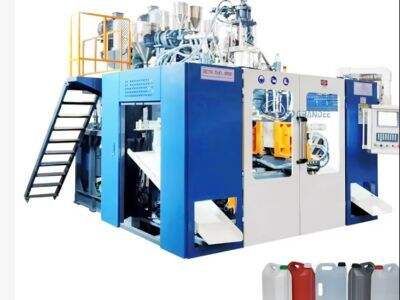
Industrial machinery forms the operational core of virtually every manufacturing, logistics, and processing operation worldwide. From the assembly lines that produce consumer electronics to the heavy equipment that shapes raw materials into finished goods, these machines determine throughput, precision, and profitability. Understanding the distinct categories of industrial machinery—and where each excels—is essential for engineers, plant managers, and procurement teams tasked with building efficient, future-ready facilities.
This guide examines the principal types of industrial machinery, their defining characteristics, and the applications in which they deliver the greatest value.
1. Production and Manufacturing Machinery
Production machinery transforms raw materials into components or finished products. This category encompasses the widest range of equipment and sits at the heart of discrete and process manufacturing alike.
CNC Machining Centers
Computer numerical control (CNC) machines—including mills, lathes, and multi-axis machining centers—deliver high-precision cutting, drilling, and shaping of metal, plastic, and composite materials. Their applications span aerospace component fabrication, automotive parts production, and medical device manufacturing, where tolerances are measured in microns.
Injection Molding and Forming Equipment
Injection molding machines, extruders, and stamping presses shape polymers and metals into high-volume, repeatable geometries. These systems are indispensable in packaging, consumer goods, and automotive supply chains, where cycle time and tooling durability directly affect unit economics.
2. Material Handling Machinery
Material handling equipment moves, stores, and protects goods throughout a facility. Efficient material flow is often the difference between a lean operation and a bottlenecked one.
- Conveyor systems: Continuous transport of bulk and unit loads across production and sorting lines.
- Forklifts and automated guided vehicles (AGVs): Flexible movement of palletized goods in warehouses and yards.
- Overhead cranes and hoists: Heavy-lift capability in steel mills, shipyards, and large assembly halls.
- Automated storage and retrieval systems (AS/RS): High-density, high-accuracy storage for distribution centers.
These systems are deployed across logistics hubs, cold-chain facilities, and just-in-time manufacturing environments where accuracy and uptime are non-negotiable.
3. Heavy Construction and Earthmoving Equipment
Heavy machinery operates at the front line of infrastructure development, mining, and large-scale civil engineering.
| Excavators | Digging, trenching, demolition | Foundation work, mining, utility installation |
| Bulldozers | Pushing and grading soil | Site preparation, road construction |
| Loaders | Lifting and transporting materials | Aggregate handling, quarrying, landscaping |
| Cranes | Vertical lifting of heavy loads | Structural steel erection, port operations |
Selection within this category depends on site conditions, load requirements, and cycle-time targets. Modern units increasingly integrate telematics and GPS-based grade control to improve utilization and reduce fuel consumption.
4. Process and Thermal Machinery
Process machinery supports continuous-flow industries—chemicals, food and beverage, pharmaceuticals, and energy—where controlling temperature, pressure, and flow is critical to product quality and safety.
5. Packaging and Labeling Machinery
Packaging equipment automates the final stage of production: filling, sealing, labeling, and palletizing. Form-fill-seal machines, case packers, and automated labeling systems are standard in food processing, e-commerce fulfillment, and consumer packaged goods. These machines must balance speed with regulatory compliance, particularly in pharmaceutical and food-contact applications.
6. Automation, Robotics, and Control Systems
Industrial robotics and control systems are less a standalone category than an integrating layer across all others. Articulated robot arms, collaborative robots (cobots), and programmable logic controllers (PLCs) enable welding, pick-and-place, inspection, and assembly tasks with consistent quality and minimal downtime. Their applications extend from automotive body shops to electronics assembly and warehouse order fulfillment.
Selecting the Right Machinery
Machinery selection should be driven by application requirements rather than equipment capability alone. Key evaluation criteria include:
- Throughput and cycle time relative to production targets
- Precision and repeatability demanded by product specifications
- Total cost of ownership, including energy, maintenance, and tooling
- Integration potential with existing automation and MES platforms
- Compliance with safety, environmental, and industry-specific standards
Conclusion
Industrial machinery is not a monolith but a spectrum of specialized systems, each engineered for distinct operational demands. Production machinery drives precision and volume; material handling equipment sustains flow; heavy equipment builds the physical world; process machinery enables continuous manufacturing; packaging systems finalize output; and automation ties it all together. Organizations that map machinery capabilities directly to application requirements—and plan for integration from the outset—position themselves to achieve higher utilization, lower operating costs, and greater scalability as production demands evolve.