
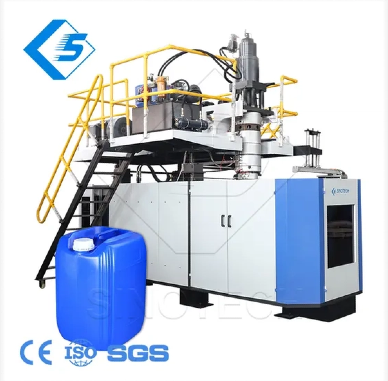
Industrial equipment is the backbone of modern manufacturing, logistics, and production operations. The machinery you select directly influences throughput, operating costs, worker safety, and long-term scalability. Yet procurement decisions are frequently driven by upfront price alone, a shortcut that often produces costly consequences down the line. This guide outlines a structured, professional approach to evaluating and acquiring industrial equipment aligned with your operational and strategic objectives.
1. Start With a Rigorous Needs Assessment
Before reviewing a single vendor catalog, define the problem the equipment must solve. A disciplined needs assessment prevents overbuying, under-specifying, and mismatched assets.
- Map your production requirements: Document required output capacity, cycle times, load tolerances, and material specifications.
- Audit current bottlenecks: Identify where existing processes constrain throughput or inflate labor costs.
- Project future demand: Estimate growth over a three-to-five-year horizon so the asset can scale with the business.
- Confirm site constraints: Verify floor space, ceiling height, power supply, ventilation, and floor-loading capacity before shortlisting models.
Involving operators and maintenance staff during this phase yields practical insights that specifications alone cannot capture.
2. Evaluate Total Cost of Ownership, Not Sticker Price
The purchase price represents a fraction of the true cost of industrial equipment. Total cost of ownership (TCO) analysis exposes the long-term financial picture and enables fair comparison between competing options.
| Acquisition | Purchase price, financing terms, delivery and installation fees |
| Energy | Power consumption ratings, efficiency certifications, load profiles |
| Maintenance | Service intervals, spare-parts pricing, consumable costs |
| Downtime | Mean time between failures (MTBF), local service response times |
| Residual Value | Resale demand, depreciation curve, upgradeability |
A machine with a higher upfront cost but lower energy draw and faster service response often outperforms a cheaper alternative within two to three years. Model both scenarios over the full asset lifecycle before committing capital.
3. Prioritize Compliance, Safety, and Certification
Regulatory non-compliance introduces legal exposure, insurance risk, and operational disruption. Confirm that every candidate unit meets the standards governing your jurisdiction and industry.
Where applicable, require manufacturers to supply third-party test reports rather than self-declarations alone.
4. Vet the Manufacturer and Service Network
Equipment reliability is inseparable from supplier reliability. A rigorous vendor evaluation protects your operation long after installation.
- Track record: Request references from businesses with comparable applications and production volumes.
- Service coverage: Confirm local technicians, guaranteed response times, and availability of critical spare parts.
- Warranty terms: Scrutinize coverage duration, exclusions, and claims procedures.
- Training and documentation: Ensure operators and maintenance teams receive structured onboarding and clear technical manuals.
- Financial stability: A supplier that exits the market leaves you with an orphaned asset and scarce parts.
5. Assess Automation, Integration, and Scalability
Modern industrial equipment increasingly operates as part of a connected ecosystem. Consider how a candidate asset will integrate with your existing systems and future ambitions.
Check for compatibility with your ERP, MES, or SCADA environment, and confirm available connectivity protocols such as Ethernet/IP, Modbus, or OPC UA. Equipment with remote diagnostics and predictive maintenance capabilities can substantially reduce unplanned downtime. Favor modular designs that permit capacity expansion without wholesale replacement, and avoid platforms whose proprietary architecture would lock you into a single vendor’s ecosystem.
6. Validate Performance Through Testing and Site Visits
Specification sheets describe ideal conditions; demonstrations reveal reality. Whenever feasible, observe the equipment operating under conditions resembling your own.
- Arrange a factory acceptance test (FAT) with agreed performance criteria.
- Conduct site visits to existing installations and interview the operators.
- Request sample runs using your actual materials or components.
- Plan a site acceptance test (SAT) upon delivery to confirm performance before final payment.
7. Structure the Purchase and Plan for Lifecycle Support
Negotiate beyond the unit price. Favorable terms may include extended warranties, prepaid service contracts, operator training packages, and guaranteed spare-parts availability. Clarify delivery, installation, and commissioning responsibilities in writing. Finally, establish an internal maintenance schedule and budget reserves for consumables and repairs so the asset delivers its projected return throughout its service life.
Conclusion
Selecting industrial equipment is a capital allocation decision with operational consequences measured in years. By grounding the process in a documented needs assessment, TCO analysis, compliance verification, vendor due diligence, and structured testing, procurement teams can secure assets that deliver reliable performance, controlled costs, and room to grow. The right equipment does not simply fill a gap on the factory floor—it becomes a durable competitive advantage.