
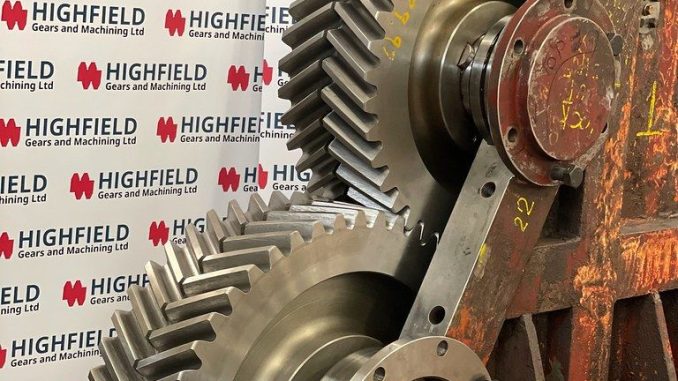
Industrial machinery represents one of the most significant capital investments a manufacturing operation will ever make. A single production line can cost millions of dollars, and every hour of unplanned downtime can translate into tens of thousands in lost revenue. Yet despite the stakes, many organizations treat equipment longevity as an afterthought—reacting to failures rather than preventing them. The result is premature replacement cycles, escalating maintenance costs, and eroded competitive advantage.
Extending the lifespan of industrial machinery is not a matter of luck. It is the product of disciplined engineering practices, data-driven decision-making, and a culture that prioritizes asset care. The following guide outlines the strategies that separate operations running equipment for twenty years from those replacing it in ten.
1. Implement a Preventive Maintenance Program
Reactive maintenance—fixing equipment only after it breaks—is the single most common cause of shortened asset life. Preventive maintenance (PM) flips this model by scheduling inspections, lubrication, calibration, and part replacement according to manufacturer specifications and operating conditions. A well-executed PM program catches wear before it becomes damage.
Key components of an effective PM program
- Scheduled lubrication: Friction is the silent killer of bearings, gears, and linkages. Follow lubricant specifications precisely and document every application.
- Vibration analysis: Regular vibration monitoring detects misalignment, imbalance, and bearing degradation weeks before failure.
- Thermal imaging: Infrared scans reveal overheating components, electrical faults, and insulation breakdown.
- Alignment checks: Shaft misalignment accelerates wear on couplings and seals. Laser alignment tools make precision checks fast and repeatable.
- Fluid analysis: Oil sampling identifies contamination, metal particulates, and chemical breakdown, providing a window into internal component health.
Documentation matters as much as execution. A PM program without records cannot be audited, refined, or defended during warranty claims.
2. Adopt Condition-Based and Predictive Maintenance
Preventive maintenance is calendar-driven; condition-based maintenance (CBM) is evidence-driven. Rather than replacing a component because it has reached an arbitrary hour count, CBM replaces it when sensor data indicates degradation. This approach eliminates unnecessary interventions while catching problems earlier than scheduled inspections alone.
Predictive maintenance takes CBM further by applying machine learning to historical and real-time data. Platforms that ingest vibration, temperature, pressure, and current signatures can forecast remaining useful life with impressive accuracy. For high-value assets—compressors, turbines, CNC centers—the return on investment is typically measured in months, not years.
Essential monitoring technologies
| Vibration sensors | Bearing wear, imbalance, misalignment | Rotating equipment |
| Thermal imaging | Overheating, electrical faults | Motors, panels, bearings |
| Oil analysis | Contamination, wear metals | Gearboxes, hydraulics |
| Ultrasonic testing | Leaks, early-stage friction | Compressed air, steam systems |
| Power quality monitors | Voltage anomalies, harmonics | Drives, sensitive electronics |
3. Operate Within Design Parameters
Machinery fails faster when pushed beyond its design envelope. Overloading, excessive speed, extreme ambient temperatures, and contaminated environments all accelerate wear. Train operators to understand why limits exist, not just what they are. Equipment operated within specification consistently outlasts identical equipment run at the margins.
Environmental control deserves particular attention. Dust, humidity, and corrosive atmospheres attack seals, electronics, and lubricants. Enclosures, filtration, and climate control are inexpensive relative to the cost of premature failure.
4. Invest in Operator Training and Ownership
Operators are the first line of defense against equipment degradation. A trained operator notices the subtle change in sound, vibration, or performance that precedes failure. Build a culture where operators perform daily checks, report anomalies immediately, and understand that equipment care is part of production, not separate from it.
5. Control Contamination Rigorously
Industry studies consistently identify contamination as a leading cause of premature machinery failure. Dirt, moisture, and metal particles infiltrate lubricants, hydraulic fluids, and bearings, triggering accelerated wear. Implement strict contamination control: breathers on reservoirs, proper filtration, clean transfer practices, and sealed storage. Small investments in cleanliness yield disproportionate gains in asset life.
6. Maintain Spare Parts and Documentation Discipline
Long equipment lifespans require long-term parts availability. Maintain critical spares on-site, and work with suppliers to confirm long-term support commitments. Simultaneously, preserve complete documentation—manuals, schematics, maintenance histories, and modification records. When equipment reaches its second decade, institutional knowledge fades; documentation is the only reliable memory.
7. Conduct Root Cause Analysis on Every Failure
Every failure is a data point. A disciplined root cause analysis (RCA) process identifies not just what broke, but why—and prevents recurrence. Treat repeat failures as unacceptable. Over time, RCA transforms maintenance from a cost center into a continuous improvement engine that directly extends asset life.
Conclusion
Extending the lifespan of industrial machinery is a strategic discipline built on prevention, data, and people. Organizations that combine rigorous preventive maintenance, condition monitoring, operator engagement, and contamination control consistently achieve asset lives that exceed manufacturer expectations—and they do so while reducing total cost of ownership and unplanned downtime. The machinery is only as durable as the management system around it. Invest accordingly, and the returns compound for decades.