
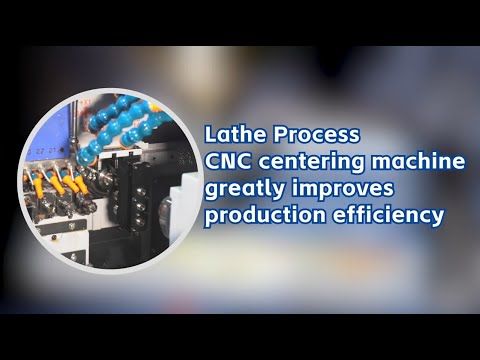
In the modern manufacturing landscape, production efficiency is no longer a luxury—it is a competitive imperative. Industrial equipment sits at the heart of this equation, serving as the engine that drives throughput, quality, and profitability. From automated assembly lines to precision CNC machines, the right equipment transforms raw inputs into finished goods with greater speed, consistency, and reliability than manual processes ever could.
This article examines the key ways industrial equipment elevates production efficiency, explores the technologies behind these gains, and outlines the metrics manufacturers should track to measure their return on investment.
The Foundation: Why Equipment Choice Defines Productivity
Industrial equipment encompasses a broad spectrum of machinery—conveyors, robotics, presses, packaging systems, and inspection tools—each designed to perform specific tasks with repeatable precision. The strategic selection and deployment of this equipment directly influence every downstream operation. When manufacturers invest in modern, well-integrated machinery, they establish a foundation for measurable efficiency gains across the entire production floor.
The core principle is straightforward: equipment that runs faster, breaks down less often, and requires less manual intervention produces more output per unit of input. This translates into lower per-unit costs and higher capacity to meet demand.
Key Ways Industrial Equipment Drives Efficiency
1. Automation Reduces Labor Dependence
Automated machinery performs repetitive tasks without fatigue, maintaining consistent cycle times throughout the shift. Robotics and programmable logic controllers (PLCs) reduce the need for manual handling, freeing skilled workers to focus on higher-value activities such as quality oversight and process improvement. The result is a leaner, more predictable workforce deployment.
2. Precision Engineering Improves Quality and Reduces Waste
Computer numerical control (CNC) machines and laser-guided systems achieve tolerances that manual methods cannot match. Higher precision means fewer defects, less rework, and reduced scrap. In high-volume production, even a small reduction in defect rates compounds into significant material and labor savings.
3. Faster Cycle Times Increase Throughput
Modern equipment is engineered for speed. High-speed presses, automated pick-and-place systems, and continuous-flow conveyor networks compress cycle times dramatically. Faster processing means more units produced per hour—directly improving overall equipment effectiveness (OEE) and plant capacity.
4. Predictive Maintenance Minimizes Downtime
Unplanned downtime is one of the most costly threats to production efficiency. Equipment equipped with sensors and IoT connectivity enables predictive maintenance, flagging potential failures before they cause stoppages. This shifts maintenance from reactive to proactive, keeping lines running and schedules on track.
5. Integration and Data Visibility Enhance Decision-Making
Connected equipment streams real-time data to manufacturing execution systems (MES) and enterprise resource planning (ERP) platforms. Operators and managers gain visibility into production rates, bottlenecks, and quality trends. Armed with this data, teams can make faster, evidence-based decisions that continuously optimize the production process.
Essential Efficiency Metrics to Track
Measuring the impact of industrial equipment requires disciplined attention to key performance indicators. The following metrics provide a clear picture of equipment-driven efficiency:
| OEE (Overall Equipment Effectiveness) | Availability × Performance × Quality | Holistic view of equipment productivity |
| Cycle Time | Time to complete one production cycle | Shorter cycles increase throughput |
| Downtime | Planned and unplanned stoppage hours | Lower downtime improves capacity |
| Scrap Rate | Percentage of rejected units | Lower scrap reduces waste and cost |
| Throughput | Units produced per time period | Direct output measure |
Strategic Considerations for Equipment Investment
- Assess total cost of ownership: Evaluate purchase price alongside maintenance, energy, and downtime costs over the equipment’s lifecycle.
- Prioritize scalability: Choose modular equipment that can be expanded or reconfigured as production demands evolve.
- Verify integration compatibility: Ensure new machinery communicates seamlessly with existing systems and software.
- Plan for training: Invest in operator training to unlock the full capability of advanced equipment.
The Bottom Line
Industrial equipment is the backbone of efficient production. By automating labor-intensive tasks, improving precision, compressing cycle times, enabling predictive maintenance, and delivering actionable data, modern machinery empowers manufacturers to produce more, waste less, and respond faster to market demands. Organizations that treat equipment investment as a strategic priority—and measure its performance rigorously—position themselves for sustained operational excellence and long-term competitive advantage.
The path to higher production efficiency begins with the right equipment, deployed thoughtfully and maintained intelligently. In an era of rising costs and tightening margins, that investment is not merely advisable—it is essential.