
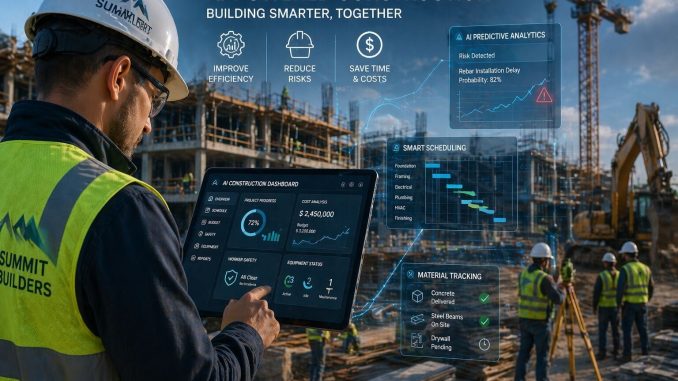
In an industry where margins are tight and timelines are unforgiving, construction site efficiency is no longer a luxury—it is a competitive necessity. Labor shortages, rising material costs, and increasingly complex project specifications have made traditional workflows unsustainable. The good news is that modern equipment offers a direct, measurable path to higher productivity, fewer delays, and safer job sites. This guide outlines practical strategies for leveraging today’s equipment technology to transform how your crews work.
Why Equipment Efficiency Matters More Than Ever
Construction projects live and die by the schedule. Every hour of idle equipment is an hour of lost revenue, and every rework cycle erodes profit margins. According to industry benchmarks, equipment downtime and inefficient fleet utilization can consume up to 20% of a project’s total budget. Modern equipment addresses these losses on three fronts: it reduces manual labor, it captures data that enables smarter decisions, and it performs tasks with greater precision—minimizing costly rework.
The shift is clear: contractors who invest in connected, automated, and data-driven machinery are completing projects faster and with fewer resources than those relying on legacy fleets.
Five Strategies for Boosting Efficiency With Modern Equipment
1. Adopt Telematics for Fleet Visibility
Telematics systems provide real-time insight into equipment location, utilization rates, fuel consumption, and maintenance needs. Instead of relying on guesswork, site managers can see exactly which machines are working, idling, or sitting unused.
- Track utilization: Identify underused assets and redeploy them to projects that need them.
- Monitor idle time: Excessive idling wastes fuel and accelerates wear—telematics flags it instantly.
- Schedule maintenance proactively: Fault codes and usage data enable predictive servicing, reducing unexpected breakdowns.
A fleet with full telematics visibility typically sees double-digit improvements in utilization within the first year.
2. Invest in GPS-Guided and Automated Machinery
GPS-guided graders, dozers, and excavators eliminate the need for stakes, string lines, and repeated survey checks. Operators work from in-cab displays that show precise grade and alignment in real time, which means fewer passes, less rework, and faster completion.
- Reduce surveying costs: Automated grade control cuts the number of manual survey passes required.
- Improve accuracy: Millimeter-level precision reduces costly over-excavation and material waste.
- Accelerate onboarding: Less experienced operators can achieve accurate results faster with machine guidance.
3. Embrace Electric and Hybrid Equipment for Lower Operating Costs
Electric compact excavators, loaders, and telehandlers are no longer experimental. They deliver lower fuel and maintenance costs, quieter operation, and zero tailpipe emissions—an advantage on urban and indoor projects where noise and air quality regulations are strict.
While the upfront purchase price may be higher, the total cost of ownership often favors electric models in high-utilization scenarios. Fewer moving parts mean less downtime, and reduced fuel spend improves project-level economics.
4. Leverage Drones and Autonomous Layout Tools
Drone-based site surveys capture accurate topographic data in a fraction of the time required by traditional methods. When paired with autonomous layout tools, crews can mark positions on site with a single operator, replacing two- or three-person layout teams.
5. Use Predictive Maintenance to Eliminate Downtime
Unplanned breakdowns are one of the largest controllable sources of inefficiency on a construction site. Modern equipment equipped with sensors and connected diagnostics can predict component failures before they occur, allowing maintenance to be scheduled during planned downtime rather than during critical production windows.
The financial impact is significant. Predictive maintenance programs commonly reduce unplanned downtime by 30–50% and extend equipment lifespan, protecting capital investment.
Measuring the Impact: Before and After Modernization
To justify equipment investment, track key performance indicators before and after adoption. The table below illustrates typical improvements reported by contractors who modernize their fleets.
| Equipment utilization rate | 55–65% | 75–85% | +20 points |
| Unplanned downtime (hours/month) | 40+ | 15–20 | –50% |
| Rework due to grade errors | Frequent | Rare | –60% |
| Fuel cost per operating hour | Baseline | 10–25% lower | –10–25% |
| Layout labor per phase | 3-person crew | 1 operator | –65% labor hours |
Building a Modernization Roadmap
Efficiency gains do not require replacing an entire fleet overnight. A phased approach works best:
The Bottom Line
Modern equipment is the most reliable lever available for improving construction site efficiency. From telematics that expose hidden losses to GPS guidance that eliminates rework, the technology is mature, proven, and accessible at every fleet size. Contractors who treat equipment as a data-driven strategic asset—rather than a fixed cost—will consistently outpace competitors on schedule, budget, and safety. The question is no longer whether to modernize, but how quickly you can start.