
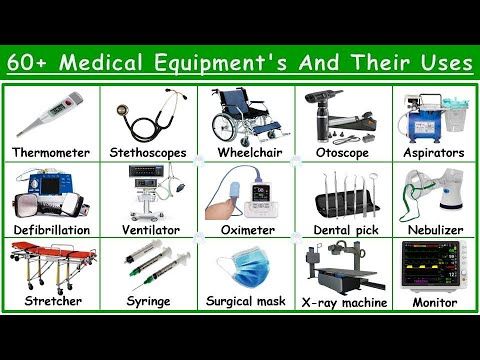
Selecting the right medical equipment is one of the most consequential decisions a healthcare practice will make. The devices your team relies on every day directly influence diagnostic accuracy, patient safety, operational efficiency, and ultimately the quality of care you deliver. Yet the procurement process is rarely simple. Between budget constraints, regulatory requirements, vendor claims, and the sheer breadth of available technology, even experienced practice managers can feel overwhelmed. This guide breaks down the essential factors to consider so you can build an equipment strategy that serves both your patients and your bottom line.
Start With a Clinical Needs Assessment
Before you review a single product catalog, define what your practice actually requires. Equipment decisions made in isolation—or driven purely by vendor promotion—tend to produce costly mismatches. A structured needs assessment answers three questions: What services do we provide today, and what do we plan to offer in the next three to five years?
Engage your clinical staff directly. Physicians, nurses, and technicians understand the daily friction points that administrators may overlook: a diagnostic device that slows patient throughput, an aging monitor with unreliable readings, or a missing capability that forces referrals to other facilities. Document these pain points and rank them by clinical impact.
- Service mix: Which procedures and diagnostics does your practice perform most frequently?
- Patient volume: What throughput must the equipment support at peak hours?
- Growth plans: Are you adding providers, locations, or service lines?
- Referral patterns: Which capabilities would let you keep more care in-house?
Evaluate Regulatory Compliance and Certification
In healthcare, compliance is non-negotiable. Every device you purchase should carry the appropriate regulatory clearances for your jurisdiction—such as FDA clearance or approval in the United States, CE marking in the European Union, or equivalent certifications elsewhere. Verify that the manufacturer holds current ISO 13485 certification for medical device quality management, and confirm that devices meet relevant safety and electrical standards.
Compliance does not end at purchase. Ask vendors how they handle software updates, security patches, and field safety notices. For connected devices, confirm that the equipment supports your cybersecurity posture—unpatched or end-of-life devices are a growing attack surface in clinical environments. A device that lacks a clear compliance and maintenance roadmap is a liability, regardless of its upfront price.
Weigh Total Cost of Ownership, Not Just Sticker Price
The purchase price is only the first line item. Total cost of ownership (TCO) captures everything a device will cost your practice over its useful life, and it is the number that should drive your budget comparisons.
| Acquisition | Purchase price, delivery, installation, and initial training |
| Consumables | Single-use supplies, reagents, probes, and filters |
| Maintenance | Service contracts, preventive maintenance, and repair parts |
| Operations | Utilities, calibration, and staff time for operation |
| Lifecycle | Expected service life, upgrade paths, and disposal or trade-in value |
Some devices are inexpensive to buy but expensive to own—proprietary consumables and restrictive service contracts can quietly inflate costs year after year. Others command a premium upfront but deliver lower long-term spend through reliability and open service models. Model both scenarios before committing.
Assess Usability, Training, and Workflow Integration
Even a technically superior device can fail in practice if it disrupts clinical workflow. Evaluate usability with the people who will actually operate the equipment. Request on-site demonstrations with your own staff performing realistic tasks, not just scripted vendor walkthroughs.
Interoperability deserves particular attention. Equipment that cannot share data with your EHR creates duplicate entry, introduces transcription errors, and undermines the value of your digital investments. Prioritize devices built on open standards and confirm integration costs in writing.
Vet the Vendor as Carefully as the Product
You are not just buying a device; you are entering a multi-year relationship. A strong vendor provides responsive support, transparent pricing, reliable supply of consumables, and a credible commitment to the product line’s future. Ask for references from practices of similar size and specialty, and follow up on them directly.
Key vendor questions include:
- What are your service response times and uptime guarantees, and are they contractual?
- What is the device’s expected lifecycle, and when is the next model planned?
- How stable is your consumables supply chain, and are there single-source risks?
- What happens if the product is discontinued—what migration support is offered?
Be cautious of deals that depend on long-term exclusive contracts without clear performance guarantees. Favorable terms today can become inflexibility tomorrow.
Plan for Security, Maintenance, and Disposal
Medical equipment increasingly runs on software and connects to networks, which makes security planning part of procurement. Confirm that devices support your access controls, logging, and update policies, and involve your IT or security team before signing. On the maintenance side, establish a preventive maintenance schedule from day one and budget for it—deferred maintenance is a leading cause of equipment failure and safety events.
Finally, plan for end of life. Understand your options for buyback, trade-in, or responsible disposal, and ensure data is securely wiped from any device leaving your practice. Lifecycle planning protects both your budget and your compliance standing.
Build a Repeatable Decision Framework
The practices that manage equipment best treat procurement as a disciplined, repeatable process rather than a series of one-off purchases. Score each candidate device against weighted criteria—clinical fit, compliance, total cost of ownership, usability, interoperability, and vendor reliability—and document the rationale behind every major decision. This discipline improves outcomes today and creates an institutional record that makes future purchases faster and more defensible.
Ultimately, the right medical equipment is the equipment that fits your clinical mission, your workflow, and your financial reality over the long term. Approach the decision with the same rigor you apply to patient care, and your technology will become a genuine asset to your practice—not merely a cost center.